Celebration: March 25
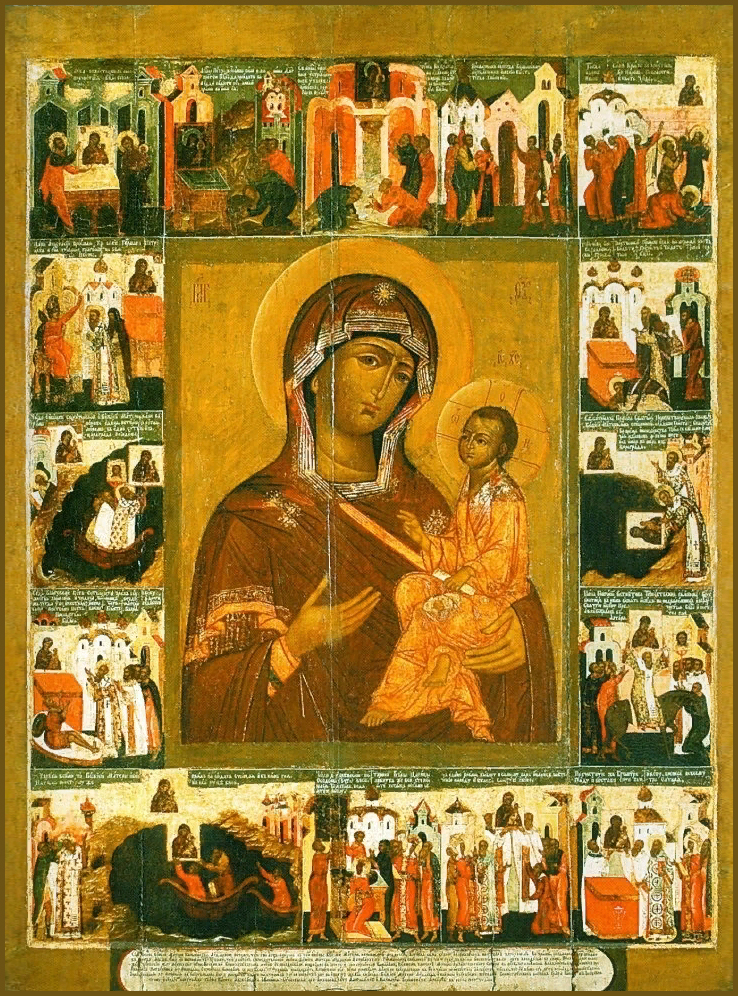
In the city of Lydda, later known as Diospole, near Jerusalem, the Holy Apostles Peter (June 29 and January 16) and John the Theologian (May 8 and September 26) preached the teachings of Jesus Christ. A church dedicated to the Most Holy Theotokos was built for new converts. Upon their return to Jerusalem, the apostles implored the Mother of God to visit and consecrate the temple with Her presence. In response, the Most Pure Virgin said: “Go in peace, and there I will be with you.” Later, in the Lydda church, an image of the Most Holy Theotokos not made with hands of amazing beauty appeared on one of the pillars, which became the object of worship of many believers. During the reign of the Emperor Julian the Apostate (361-363), another miracle occurred in Lydda. Masons were sent to the temple to destroy this wonderful image, but despite their efforts, it not only did not disappear, but also went deeper into the pillar. The fame of the blessed image spread all over the world, and the faithful began to gather in Lydda to worship the image of the Mother of God not made with hands. In the 8th century, by order of Patriarch Herman of Constantinople, a list was compiled, which, by a miracle, turned out to be in Rome and gained miraculous power (celebration on June 26). This list became known as the Roman List. Also in Lydda was another uncreated image of the Virgin Mary, which was located in the church founded by the Holy Apostle Peter (Acts 9: 32-35). When Jews and Gentiles wanted to take the temple from Christians, it was locked up for three days by order of the governor, so that a sign would occur. After three days, the church was opened, and the image of the Virgin not made with hands was found in it. Three Eastern patriarchs (Jerusalem, Antioch, and Alexandria) wrote about the two images of the Virgin Mary from Lydda in their epistle to the iconoclast Emperor Theophilus (829-842). This epistle is mentioned by Emperor Constantine VII Porphyrogenitus (912-959) in his historical work on the image of the Savior not made with hands in Edessa. An interesting connection between the Lidda Icon of the Mother of God and the appearance of the Vladimir and Tikhvin images of the Most Holy Theotokos in Russia is noted in the “Story of the Presentation of the Vladimir Icon of the Mother of God”, which refers to Russia as a special lot of the Mother of God.