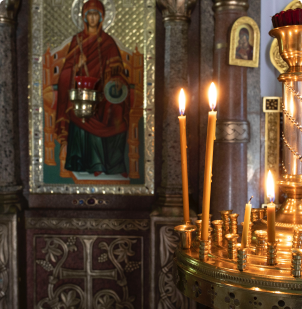
Hagiosoritissa (Greek :γγιοσορίτισσα) is a type of image of the Virgin without the Baby, which is usually depicted in a profile angle, with a prayer gesture of hands. The name of this icon comes from the place of its original origin — the Chapel of Agia Soros (ἈΓίΑ σορός) in Constantinople, which contained the Girdle of the Most Holy Theotokos, also known as “Saint Cancer.” In Italy, this unique image is known by various names, such as “Madonna di Edessa” (Edessa Madonna), “Madonna di Sant’Alessio, “Avvocata (Protector), and” Madonna dell’intercessione ” (Patroness). The Hagiosoritissa icon was the object of worship of Saint Alexy the man of God. In Rome, there are still ancient Byzantine icons of Our Lady of this type, which are found in churches such as Santa Maria in Aracheli and Santa Maria del Rosario, as well as in other places. The iconography of Hagiosoritissa is associated with the image of the Virgin within the deisis composition, and in the Greek tradition such icons can also be called Paraklesis (Greek: παράκλησις – Petitioner). Very often, such images depict the Virgin holding a scroll with the text of her prayer to her Son. The type of Hagiosoritissa was widespread in Byzantine and Balkan iconography, although it is less common in Russian iconography. Some of the earliest depictions of the Hagiosoritissa (Paraklesis) in Russia include the Bogolyubskaya icon of the Mother of God from the 12th century (presumably, the original version did not contain a scroll), as well as the image on the door of the Cathedral of the Nativity of the Virgin in Suzdal, created in the late 12th century.
Order sacrifices
in temples and churches online
in temples and churches online