Celebration: December 10, March 21, September 21, June 16 The (rolling)
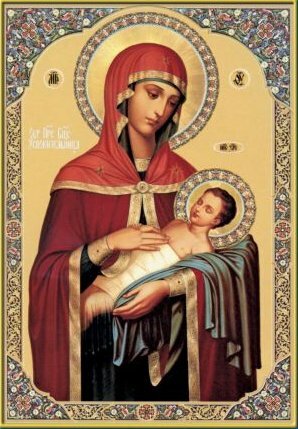
Icon of the Sign of the Mother of God, known as the Kursk Icon of the Sign, is one of the oldest icons in the Russian Orthodox Church. Its history is connected with the XIII century, the time of the Tatar invasion, when the entire Russian state was experiencing a terrible disaster. The city of Kursk, devastated by the invasion of Batu, fell into decline. Once, in the vicinity of the city, a hunter found an icon lying at the roots of a tree and looking face down. The hunter picked up this image and found out that it is very similar to the icon of the Sign from Novgorod. In parallel with this miracle, another thing happened — when the hunter picked up the holy icon, a source of clean water began to protrude from the ground. This happened on September 8, 1295. The hunter decided not to leave the icon in the forest and, at the site of the find, built a small wooden chapel, where he placed the image of the Virgin. Soon the residents of the city of Rylsk, which was not far away, learned about this miracle. They started coming to this holy place to worship the new shrine. The icon was moved to Rylsk and placed in a new church dedicated to the Nativity of the Most Holy Theotokos. However, the icon was miraculously returned to the place of its first appearance. Local residents tried several times to take the icon to the city, but it always mysteriously returned to its original place. This was understood as the will of the Mother of God, favorably disposed to the place of her appearance. Every year, on the Friday of the ninth week after Easter, the icon of the Sign was accompanied by a procession from the Kursk Znamensky Cathedral to the place of its first appearance in the Korennaya Desert. There she stayed until September 12, after which she returned to Kursk again. This rite was established in 1618 in memory of the transfer of the icon from Moscow to Kursk and in honor of its first appearance. The Kursk icon “Sign” of the Mother of God was especially associated with important events in the history of Russia, such as the liberation war of the Russian people during the Polish-Lithuanian invasion in 1612 and the Patriotic War of 1812. The last time the miraculous icon of the Sign was on Russian soil was on September 14, 1920, when it was in the Crimea, on the side of the troops fighting against the Bolsheviks. After leaving Russia in 1920, the holy icon became a “Hodegetria” (Guide Book) The Church of the Russian Orthodox Church abroad and did not leave its headquarters with the first hierarchs of the Russian Orthodox Church outside of Russia. It is currently located in one of the churches of the New Indigenous Desert near New York, USA. In the Kursk Znamensky Cathedral there is a list from this miraculous icon.